


Analysis of the Multiple Classification Methods for Linear Motion Rolling Bearings
In linear motion systems, the classification of rolling bearings is far richer than the commonly cited 'five major categories.' Beyond general comprehensive classifications, bearings can also be subdivided across multiple technical dimensions to more accurately match the requirements of different application scenarios.
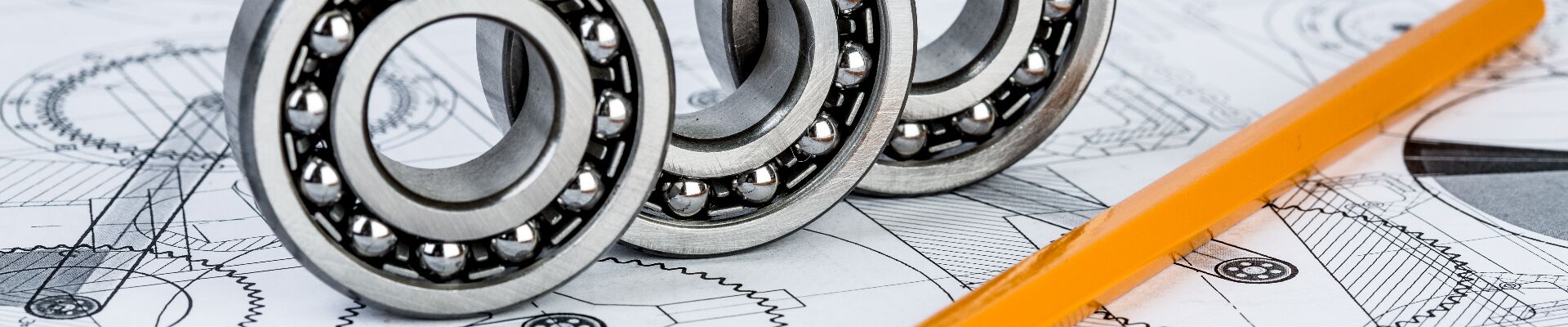
Firstly, based on the type of rolling element, there are mainly three categories: ball, roller, and needle bearings. Ball bearings primarily use point contact, offering low friction and flexible operation; roller bearings provide higher load capacity through line contact; and needle bearings, due to their compact structure, are often used in space-constrained environments.
Secondly, based on load direction and functional characteristics, bearings can be classified as those that only bear radial forces and composite structures that can bear radial loads while transmitting torque. The latter is particularly crucial in linear drive systems that require synchronized transmission of rotational torque.
Thirdly, according to the number of rows of rolling elements, there are single-row, double-row, and even triple- or quadruple-row configurations. Generally, the more rows, the higher the load capacity and rigidity, but this also demands greater installation precision and higher costs.
Additionally, by referencing the structural coding system in industry standards (such as '§3-3 Codes for Linear Motion Rolling Bearings'), various typical structural forms can be identified. For example: AJ type (Adjustable Type): features fine adjustment of clearance, suitable for high-precision positioning scenarios; OP type (Open Type): open structure for easy installation and maintenance; RN type (Recirculating Needle Roller Guide): utilizes a recirculating needle design, balancing high rigidity and long service life.
In conclusion, the classification of linear motion rolling bearings cannot be summarized by a single dimension. It integrates rolling element types, load characteristics, row arrangements, and structural codes to provide a systematic reference for engineering selection.
If you want to know more bearing information,please contact us :
sales@cwlbearing.com
service@cwlbearing.com
Post time: Dec-25-2025


