


Point Contact or Line Contact? The Mechanical Wisdom Behind Rolling Bearings
In the world of rolling bearings, the way forces are transmitted determines the upper limit of performance. Based on the contact form between rolling elements and raceways, mainstream bearings can be divided into two main types: point contact and line contact — they differ not only in structure but also in load-bearing logic.
Point Contact: Flexible but Limited Load Capacity
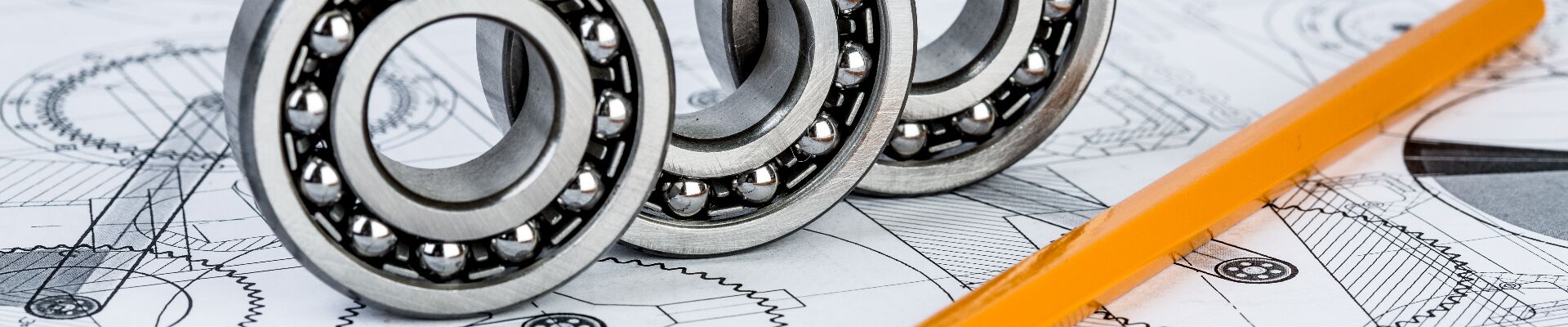
Ball bearings, represented by deep groove ball bearings and angular contact ball bearings, make contact between the balls and the inner and outer raceways at just a 'point' when unloaded; under load, the contact area expands into a small elliptical surface. This type of contact distributes stress relatively evenly, making it suitable for high-speed operation and medium-load scenarios, but its load capacity is naturally limited by the relatively small contact area.
Line Contact: Strong but with a 'Weak Spot'
In contrast, roller bearings like cylindrical roller bearings exhibit 'line contact' in ideal conditions — the roller makes contact with the raceway along a theoretical straight line in the axial direction. When loaded, this contact area becomes rectangular or trapezoidal. While the load capacity per unit length is significantly improved, if the roller edges are not processed, stress concentration tends to occur at the ends, accelerating fatigue spalling and greatly shortening service life.
Key Breakthrough: Crown Design Resolves Edge Stress
Modern high-performance roller bearings apply a slight 'crown' (or barrel-shaped modification) to the roller surface, optimizing the originally sharp line contact into a 'modified line contact.' This design effectively alleviates peak edge stress, allowing the load to be distributed more evenly, thereby significantly improving fatigue life and dynamic stability. In engineering practice, the ratio of the contact ellipse's major axis (2a) to the effective roller length (l) is often compared to determine whether the ideal modification has been achieved.
From basic principles to advanced optimization, the choice between 'point' and 'line' is not just a structural difference but an art of engineering trade-offs. And that seemingly tiny roller crown is the secret weapon that enables modern heavy-duty bearings to achieve long life and high reliability.
Post time: Dec-19-2025


