


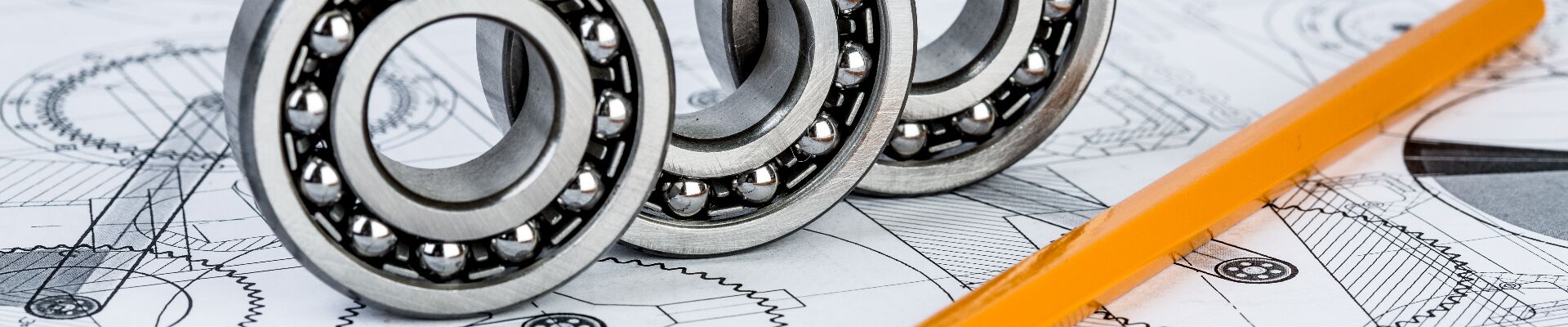
Three-Step Guide to Rolling Bearing Selection
In engineering design, the proper selection of rolling bearings directly affects the reliability and lifespan of equipment operation. To help beginners quickly grasp the selection logic, the entire process can be summarized in three key steps:
Step 1: Determine the Bearing Type
It is necessary to comprehensively consider factors such as load direction (radial, axial, or combined), load magnitude, rotational speed, and whether self-aligning functionality is required. For example, deep groove ball bearings are suitable for light to medium radial loads and high-speed operation; cylindrical roller bearings excel at handling high radial loads; and angular contact ball bearings are ideal for conditions where radial and axial loads coexist. By comparing the performance characteristics of different types of bearings (such as load capacity, limiting speed, and self-aligning ability), suitable options can be initially narrowed down.
Step 2: Calculate and Determine the Size
After the type is confirmed, the bearing dimensions should be checked based on the dynamic and static loads it will experience. Usually, the required basic rated life is calculated according to the rated dynamic load, and then the actual working conditions are checked to verify whether the static load meets safety requirements. The core of this stage is to ensure that the selected bearing operates reliably within the expected lifespan, avoiding premature failure due to undersizing.
Step 3: Match the Precision Grade and Clearance
Finally, based on the equipment’s requirements for rotational accuracy, vibration control, and operating temperature, the appropriate tolerance grade (such as P0, P6, P5, etc.) and clearance group (C2, CN, C3, etc.) should be selected. High-precision equipment typically requires higher tolerance grades and specific clearances to ensure smooth operation and responsive performance.
By following the above “Type—Size—Precision” three-step method, engineers can systematically complete the selection of rolling bearings, improving efficiency and enhancing design reliability. This method is logically clear, practical, and especially suitable for entry-level technicians to quickly develop a structured selection mindset.

If you want to know more bearing information,please contact us :
sales@cwlbearing.com
service@cwlbearing.com
Post time: Dec-29-2025


