


hat is a release bearing, the use of clutch release bearing
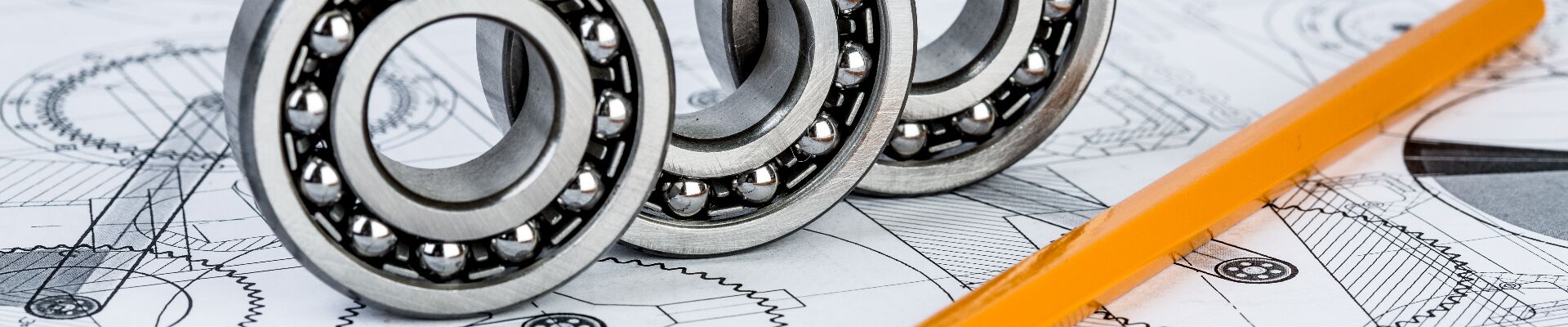
Release bearing is the bearing used between the clutch and the transmission, usually we call it "clutch release bearing". When stepping on the clutch, if the fork is combined with the clutch pressure plate that is rotating at high speed, a bearing must be needed to eliminate the heat and resistance caused by direct friction, so the bearing installed in this position is called a release bearing. The separating bearing pushes the pressure plate to separate it from the friction plate, thus cutting off the power output of the crankshaft.
Clutch release bearing performance requirements:
The movement of the separation bearing should be flexible, without sharp noise or jamming, its axial clearance should not exceed 0.60mm, and the wear of the inner race should not exceed 0.30mm.
Working principle and function of clutch release bearing:
The so-called clutch, as the name suggests, uses "separation" and "combination" to transmit the right amount of power. The engine is always spinning, while the wheels are not. To stop the vehicle without damaging the engine, the wheels need to be disconnected from the engine in some way. The clutch controls the slip between the engine and the transmission, making it easy to connect a spinning engine to a non-rotating transmission.
The clutch release bearing is installed between the clutch and the transmission, and the release bearing seat is loosely sleeved on the tubular extension of the bearing cover of the first shaft of the transmission, and the lug shoulder of the release bearing is always against the separation fork through the return spring, and retreats to the last position, maintaining a gap of about 3~4mm with the end of the separation lever (separation finger).
Because the clutch pressure plate, the separation lever and the engine crankshaft run synchronously, and the separation fork can only move axially along the clutch output shaft, it is obviously not possible to directly use the separation fork to pluck the separation lever, through the separation bearing can make the separation lever rotate while moving axially along the clutch output shaft, so as to ensure that the clutch can engage smoothly, the separation is soft, reduce wear, and extend the service life of the clutch and the entire transmission system.
Key points to note when using clutch release bearings:
1. According to the operation regulations, avoid the clutch in a semi-engaged and semi-separated state, and reduce the number of clutch uses.
2. Pay attention to maintenance, and use the steaming method to saturate the butter with steaming methods during regular or annual inspection and maintenance, so that it has sufficient lubricant.
3. Pay attention to leveling the clutch separation lever to ensure that the elastic force of the return spring meets the regulations.
4. Adjust the free stroke to meet the requirements (30-40mm) to prevent the free stroke from being too large or too small.
5. Minimize the number of joints and separations and reduce the impact load.
6. Step lightly and easily to make it join and separate smoothly.
Common factors that cause damage during the use of clutch release bearings:
1. The working conditions and force of the clutch release bearing
The separation bearing is affected by axial load, shock load and radial centrifugal force during high-speed rotation during use, and the torsional moment is formed because the fork thrust and the reaction force of the separation lever are not in the same straight line. Clutch release bearings have poor working conditions, intermittently rotate at high speed and withstand high-speed friction, high temperature, poor lubrication conditions, and no cooling conditions.
2. The cause of damage to the clutch release bearing
The damage of the clutch release bearing has a lot to do with the driver's operation, maintenance, and adjustment, and the causes of damage are roughly as follows:
1) Overheating occurs due to excessive working temperature
Many drivers often step on the clutch halfway when turning or decelerating, and some still put their feet on the clutch pedal after gearing; Some vehicles have too much free stroke adjustment, so that the clutch is not completely separated, in a semi-engaged and semi-separated state, this state causes dry friction and generates a large amount of heat transfer to the separation bearing, the shaft bearing heat reaches a certain temperature, the butter melts or dilutes and flows, so that the temperature of the separation bearing is further increased, and it burns out when the temperature reaches a certain level.
2) Lack of lubricating oil and wear
For 360111 separation bearing, the back cover of the bearing should be opened and filled with grease during maintenance or when the transmission is removed, and then the rear cover can be reassembled; For the 788611K separation bearing, it can be removed and soaked in molten grease, and then taken out after cooling to achieve the purpose of lubrication. In actual work, the driver is easy to ignore this, resulting in a lack of oil in the clutch release bearing. In the case of no or little lubrication, the wear of the separation bearing is often several times to dozens of times the wear after lubrication. As wear increases, the temperature will also increase significantly, making it more susceptible to damage.
3) The free itinerary is too small or the number of loads is too high
According to the requirements, the gap between the general clutch release bearing and the release lever is 2.5mm, and the free travel reflected on the clutch pedal is 30-40mm. According to the principle of fatigue failure, the longer the bearing works, the more serious the damage; The more times it is loaded, the more likely it is to cause fatigue failure of the release bearing. And the longer the working time, the higher the temperature of the bearing, the easier it is to burn out, which reduces the service life of the separation bearing.
4) In addition to the above three reasons, whether the separation lever is adjusted flat and whether the separation bearing return spring is good also has a great impact on the damage of the separation bearing.
Clutch release bearing maintenance:
Fix the inner ring of the separation bearing by hand, rotate the outer ring, and apply pressure in the axial direction at the same time, if there is a blockage or obvious gap feeling, the separation bearing should be replaced. Separation bearings are usually a one-time grease refill. Disassemble and clean at will during maintenance. If there is dirt, you can wipe the surface with a clean rag.

Post time: Mar-03-2026


