


What’s the types of Robotic Bearings
In the rapidly developing field of robotics, the importance of precision and efficiency cannot be overstated. Robotic bearings are one of the key components that enable these qualities. Robotic bearings are specialized mechanical components that facilitate smooth motion and reduce friction between moving parts in robotic systems. This article will delve into the various types of robotic bearings, their functions, and their applications in modern robotics.
Robotic bearings support loads and allow rotational or linear motion in robotic joints and mechanisms. They play a vital role in ensuring smooth and efficient robot operation, minimizing component wear.
The choice of bearing type significantly impacts the performance, reliability, and service life of a robotic system.
The types of Robot Bearings
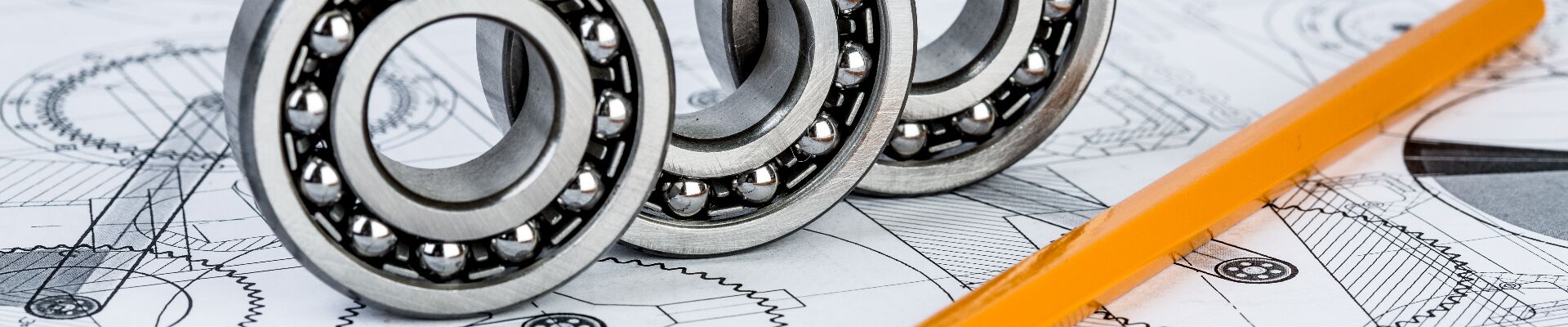
Ball bearings are one of the most common bearing types used in robotics. They consist of balls positioned between two raceways, enabling smooth rotational motion. Ball bearings are renowned for their ability to withstand both radial and axial loads, making them suitable for a wide range of robotic applications. Due to their low friction, they are particularly well-suited for high-speed applications.
Roller bearings use cylindrical rollers instead of balls, allowing them to carry greater loads. They are ideal for applications requiring high radial load capacity. Roller bearings can be further categorized into different types, including tapered roller bearings, cylindrical roller bearings, and spherical roller bearings, each designed for specific load and alignment conditions.
Thrust bearings are designed to support axial loads, that is, forces acting parallel to an axis. These bearings are crucial in robotic applications where large axial forces are applied to robotic joints, such as in robotic arms and manipulators. Thrust ball bearings and thrust roller bearings are common bearing types used in robotic systems.
4. Magnetic bearing:
Magnetic bearings use magnetic fields to support the rotor, eliminating the need for physical contact and creating a virtually frictionless structure. This technology is particularly effective in high-speed applications where conventional bearings wear out quickly. Because they maintain precision and reduce energy consumption, magnetic bearings are often used in advanced robotics and aerospace applications.
Linear bearings are designed for applications requiring linear motion. They allow smooth movement along a straight path and are commonly used in robotic arms, conveyor systems, and automated machinery. Linear ball bearings and linear roller bearings are popular choices for these applications.
Spherical bearings allow for angular misalignment between the shaft and housing, making them suitable for applications where the motion is not perfectly aligned. They are often used in robotic joints where a degree of flexibility and adaptability is required.
While robotic bearings offer numerous advantages, they also present challenges. Durability, wear resistance, and the ability to operate in a wide range of environmental conditions are key factors manufacturers must consider. Material innovations such as ceramics and advanced polymers are helping to address these challenges, driving the development of bearings that can withstand harsh conditions and maintain high performance.
Post time: Sep-28-2025


