


Working Principle of Tankless Roller Bearings for Trucks
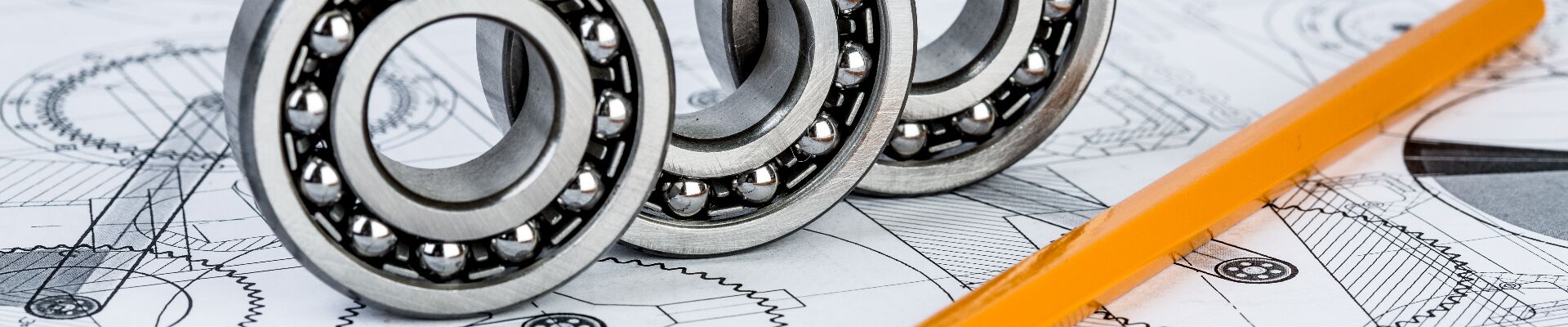
Tankless roller bearings for trucks are rolling bearings, primarily double-row tapered roller bearings. A common failure of tankless rolling bearings is overheating. Below, we share the relevant structure, working principle, and causes of overheating in tankless rolling bearings for trucks, and discuss corresponding measures to minimize bearing failures.
1. Structure of Tankless Roller Bearings
The main components of a tankless rolling bearing consist of seven parts: 1. Sealing cover; 2. Outer ring; 3. Rollers; 4. Plastic steel cage; 5. Spacer ring; 6. Inner ring; 7. Sealing cover assembly. Accessories include a rear guard, front cover, marking plate, bolts, sealing rings, and anti-loosening plates.
2. Working Principle of Tankless Roller Bearings
The general structure of a rolling bearing consists of an inner ring, outer ring, rolling elements, cage, and spacer ring. Roller bearings transmit force and achieve rolling by the rolling of the rolling elements between the inner and outer rings. The inner ring fits tightly onto the journal. When the wheel rotates, the inner ring rotates with the journal, guiding the rolling elements to rotate on their own axis and revolve along the raceways of the inner and outer rings. Bearings have radial and axial clearances to ensure the rolling elements can rotate freely. The relative movement between the rolling elements and the inner and outer rings is entirely rolling, not sliding. The cage maintains the position of the rolling elements, preventing tilting and collisions, and ensuring the rolling elements are evenly distributed along the raceways.
3. Reasons for bearing overheating during operation:
1. Excessive grease
2. Insufficient or deteriorated grease
3. Insufficient axial clearance
4. Foreign matter inside the bearing
5. Internal bearing damage
1) Poor material or heat treatment.
2) Improper impact during assembly, disassembly, cleaning, handling, or use.
3) Poor fit between the inner ring and the shaft, or between the outer ring and the bearing saddle.
4) Localized external damage, corrosion, uneven loading, or overload.
5) Normal fatigue failure of the material.
6. Poor Bogie Condition
4. Countermeasures to Reduce Rolling Bearing Failures
4.1 Strictly control the manufacturing and maintenance quality of bogies and wheelsets.
4.2 Conduct a comprehensive investigation into the reliability of the train braking system.
4.3 Strengthen inter-departmental cooperation, requiring locomotive drivers and crew to use the train braking system as required and avoid unnecessary use of emergency brakes.
Increase responsibility, concentrate on work, and avoid over-inflating the vehicle brakes during air filling. Carefully inspect and adjust the train testing equipment and locomotive air pressure regulating valves on the locomotive to eliminate potential faults. The track maintenance department should strengthen the maintenance of the track to meet traffic safety requirements and continuously improve track quality; during shunting operations at stations, control train speed and reduce the use of wheel brakes; where possible, install wheel-destructive speed reducers on the track. When loading cargo, ensure even loading and prevent overloading, uneven loading, and concentrated loads.
3.4 Continuously Improve Vehicle Braking System and Running Gear
To meet the requirements of high-speed increases, 1) the GK type brakes should be phased out as soon as possible, the 103 type brakes should be gradually phased out, and the 120 type brakes should be upgraded to ensure that the overall braking performance of the train is coordinated and synchronized; 2) the bogie structure should be improved to reduce vibration and increase running stability. For example, to increase the stability of the side frames, a support device similar to a spring support plate should be added between the two side frames; hydraulic side bearings or rubber side bearing pads should be added to the side bearings to reduce the gap between the upper and lower side bearings or to provide gapless buffer side bearings; rubber vibration damping pads should be added between the side frames and the load-bearing saddle to avoid rigid contact between components and excessive vibration or displacement during operation, thereby reducing unnecessary rigid forces between the wheels and rails.
Post time: Feb-02-2026


