


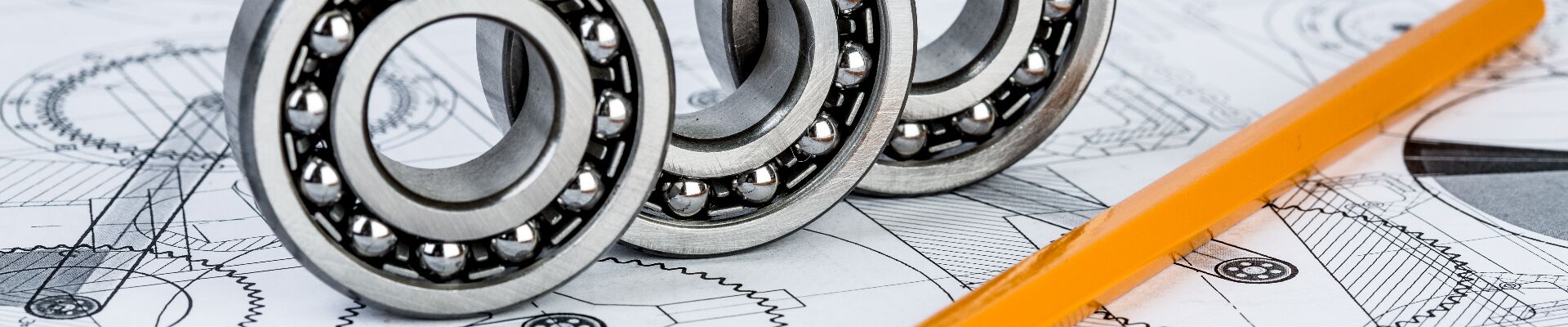
X30CrMoN15-1 (A High-Nitrogen Martensitic Stainless Steel) Widely Used in Precision Tools and Bearings
X30CrMoN15-1 is a high-nitrogen martensitic stainless steel defined by the German DIN standard, also known as 1.4108 or a modified version of AISI 440A. Engineered with high chromium and nitrogen content, this material combines high hardness (57–58 HRC) with excellent corrosion resistance and high-temperature stability; it is widely used in precision tools, bearings, and high-temperature aerospace components. Through the synergistic effects of nitrogen solid-solution strengthening combined with molybdenum and chromium, the material exhibits significantly enhanced resistance to pitting, hydrogen embrittlement, and wear. It performs exceptionally well in corrosive environments containing sulfur and chloride ions, making it a critical material bridging high-end manufacturing and extreme operating conditions.
2. Chemical Composition and Strengthening Mechanisms
The chemical composition of X30CrMoN15-1 is precisely balanced, with key elements serving the following functions:
Chromium (Cr): 13.0%–17.0%; forms a dense chromium oxide (Cr₂O₃) passivation layer to resist oxidation and acid-base corrosion;
Molybdenum (Mo): 0.6%–0.75%; enhances pitting corrosion resistance and inhibits high-temperature creep;
Nitrogen (N): 0.8%–1.2%; replaces carbon to achieve solid-solution strengthening while refining grain structure and improving resistance to intergranular corrosion;
Carbon (C): 0.26%–0.35%; forms carbides with chromium and molybdenum to increase matrix hardness and wear resistance;
Cobalt (Co): Trace addition (≤0.5%); improves high-temperature red hardness and the cutting edge's resistance to tempering-induced softening.
Impurity elements (Sulfur ≤0.03%, Phosphorus ≤0.04%) are strictly controlled to ensure material purity and processing stability. 3. Mechanical Properties and High-Temperature Characteristics
By optimizing the heat treatment process, X30CrMoN15-1 exhibits exceptional performance:
Basic Properties:
Tensile strength ≥550 MPa, yield strength ≥340 MPa, elongation after fracture ≥15%;
Hardness 57–58 HRC, impact toughness ≥63 J, reduction of area ≥50%;
High-Temperature Performance:
Hardness maintained at ≥50 HRC at 600°C, creep rupture life ≥100 hours (stress ≥150 MPa);
Short-term temperature resistance up to 800°C; oxidation resistance superior to standard 440A stainless steel;
Fatigue Characteristics: Fatigue limit ≥280 MPa under dynamic loading; crack propagation rate reduced by 20%–30%.
4. Heat Treatment Process and Microstructure Control
Performance optimization of X30CrMoN15-1 relies on a precise heat treatment sequence:
Solution Treatment: Heating to 1000°C–1100°C followed by rapid water or air cooling to dissolve carbonitrides and obtain a uniform austenitic structure;
Aging Treatment: Holding at 400°C–600°C for 2–4 hours to promote the dispersed precipitation of fine carbonitrides, enhancing strength and wear resistance;
Quenching + Low-Temperature Treatment:
Oil Quenching: Hardness reaches 58 HRC after quenching at 1000°C–1050°C; residual austenite content ≤5%;
Cryogenic Treatment: Holding at -80°C to -196°C to eliminate residual austenite; hardness increases by 3–5 HRC, and wear resistance improves by 20%;
Surface Strengthening:
Nitriding: Gas nitriding at 530°C–580°C forms a 5–20 μm hardened layer; surface hardness reaches 1200–1500 HV;
Laser Cladding: Application of Cr₂O₃ or Al₂O₃ coatings; high-temperature oxidation resistance improves by 50%. 5. Key Application Areas
The unique properties of X30CrMoN15-1 make it indispensable in the following fields:
Precision tools: Surgical instruments, carbide cutting tools, high-precision gear hobs;
Bearing manufacturing: Aero-engine main shaft bearings, high-speed machine tool spindle rollers;
Aerospace: Turbine engine fasteners, rocket fuel pump gears, high-temperature sensor housings;
Energy equipment: Nuclear reactor control rod drive mechanisms, high-temperature bolts for supercritical units;
Chemical equipment: Chlor-alkali electrolyzer linings, corrosion-resistant flanges for deep-sea oil and gas platforms.
6. Processing and Manufacturing Guidelines
Hot working:
Forging temperature: 1100°C–1200°C; finishing forging temperature: ≥900°C; forging ratio: ≥3:1 to eliminate segregation;
Hot rolling temperature for plates: 950°C–1050°C to avoid grain boundary carbide accumulation;
Cold working:
Cold rolling reduction rate: ≤25%; intermediate annealing temperature: 680°C–720°C to eliminate work hardening;
Deep drawing: Control strain rate to ≤0.01 s⁻¹; multi-pass incremental forming is recommended;
Welding process:
Preheating temperature: 150°C–200°C; use ER410NiMo low-hydrogen welding consumables;
Post-weld stabilization treatment: 850°C for 2 hours to eliminate the risk of sensitization in the heat-affected zone.
Post time: Oct-10-2026


