


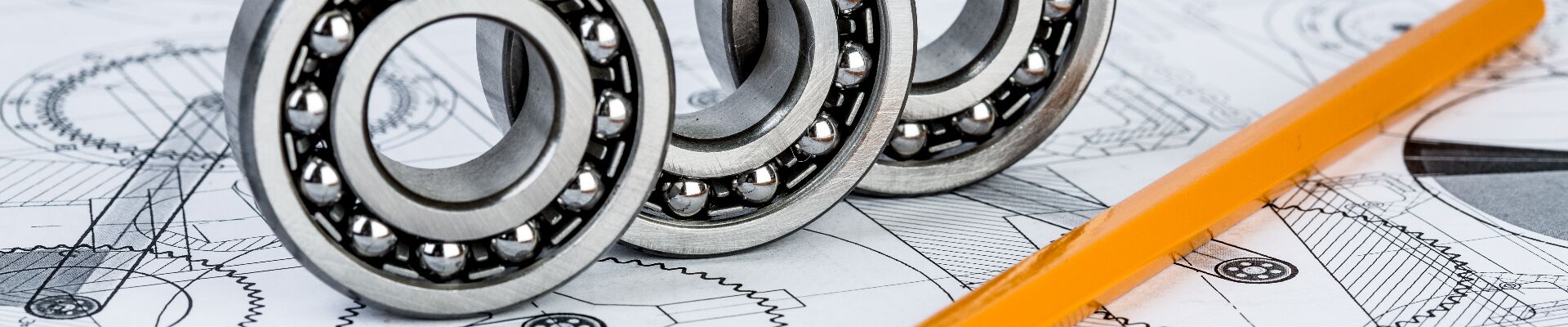
A Comprehensive Analysis of Rolling Bearing Precision Manufacturing
In the silent world of modern machinery, rolling bearings play a crucial role. As a core component supporting rotating mechanical parts and reducing friction, they act like the "joints" that allow machines to move flexibly. From household appliances to heavy machinery, bearing performance directly determines the operating efficiency and lifespan of equipment. Let's step into the factory and find out more.
Raw Materials and Forging
The high-carbon chromium bearing steel typically used undergoes rigorous chemical composition and internal defect testing to ensure extremely high purity and fatigue strength.
In the initial forming stage, forging is the most common method for forming bearing ring blanks.
By forging heated steel under pressure, not only can a shape close to the final product be obtained, saving materials, but more importantly, this process effectively eliminates coarse grains and defects within the metal, resulting in a more rational and dense distribution of metal flow lines, thus laying a solid foundation for the long service life of the bearing.
Turning and Heat Treatment
After forging, the blank needs to be CNC turned to initially machine the geometric structure of the bearing rings, such as the grooves and flanges, leaving allowance for subsequent precision machining.
Subsequently, the bearing undergoes a crucial step that determines its internal quality—heat treatment.
Through processes such as quenching and low-temperature tempering, the internal structure of the steel is transformed, resulting in extremely high surface hardness and wear resistance. Today, many advanced factories have introduced cutting-edge processes such as vacuum heat treatment or protective atmosphere heat treatment. These technologies effectively reduce decarburization on the surface of parts, allowing the bearing to maintain hardness while possessing sufficient toughness to withstand high loads and impact conditions.
Precision Grinding
Rolling bearings are among the most precise mechanical products, with dimensional tolerances and rotational accuracy typically designed and manufactured at the micrometer level. After heat treatment, the parts have extremely high hardness, requiring even more precise grinding processes to achieve final shaping. In internal and external diameter grinding, end face grinding, and the most critical groove grinding, CNC machine tools and precision grinding machines work together to push the dimensions, geometric accuracy, and surface finish of the parts to the extreme. Even minute deviations in raceway shape directly affect the bearing's rotational smoothness and noise level; therefore, the grinding process is a true "touchstone" for testing manufacturing prowess.
Assembly and Rigorous Testing
Once the inner ring, outer ring, rolling elements, and cage are all ready, the cleaning and assembly stage begins. After thoroughly removing impurities from previous processes, each component is precisely assembled and injected with the appropriate amount of grease. However, assembly does not mean it's ready for shipment. Testing technology plays a crucial role in the production of rolling bearings. Every bearing must undergo rigorous final inspection: from rotational flexibility and clearance measurement to vibration and noise spectrum analysis on specialized instruments. Only those bearings that meet all standards are packaged with rust prevention measures and ultimately shipped to equipment worldwide.
Bearing production is not only a physical transformation from rough to refined, but also a perfect fusion of materials science, heat treatment technology, and precision machining. It is this meticulous attention to detail in countless processes that forges the solid foundation supporting the smooth operation of modern industry.
Post time: Aug-10-2026


