


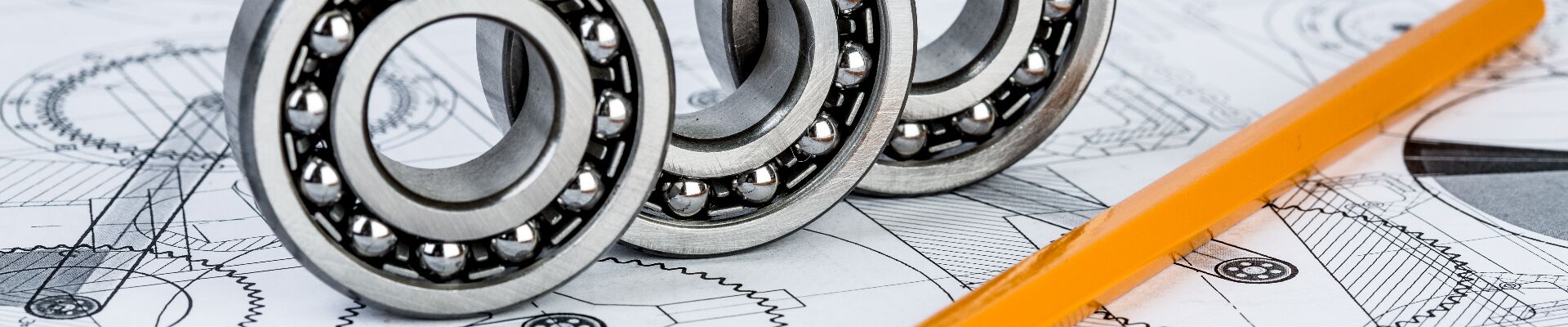
Bearings are the "joints" of machinery.
Bearings are the "joints" of machinery, used to support rotating shafts.
They are divided into two main categories: rolling bearings and sliding bearings.
Common bearings consist of four parts: outer ring, inner ring, rolling elements, and cage.
Rolling elements, like small balls or rollers, roll between the inner and outer rings, reducing friction in the machine. This makes the machine run more smoothly.
A deeper understanding of the composition and classification of bearings can help us better maintain our machines:
1. The four basic components of a bearing:
Inner ring: Fits snugly onto the rotating shaft of the machine and rotates together.
Outer ring: Mounted in the bearing housing, providing support.
Rolling elements: Roll between the inner and outer rings. They come in shapes such as spherical (balls) and rollers (cylindrical or conical).
Cage: Separates the rolling elements, preventing them from rubbing against and colliding with each other.
2. Classification by load direction:
Radial bearings: Primarily bear forces perpendicular to the shaft. For example, deep groove ball bearings.
Thrust bearings: Primarily bear forces parallel to the shaft (axial force). Thrust bearings: Can withstand both vertical and parallel forces simultaneously.
3. Sliding bearings vs. rolling bearings: Rolling bearings: Rolling element contact, low friction, energy saving, easy to standardize and purchase. Lifespan can be predicted using formulas (e.g., calculating L₁₀ life). Sliding bearings: Surface contact with a lubricating oil film in between. High load capacity, long lifespan, mostly used in heavy machinery.
Three key factors for bearing quality:
Material selection: High-quality bearing steel has high hardness and wear resistance, extending service life.
Machining accuracy: The surface finish of the inner and outer rings and rolling elements directly affects operational smoothness.
Lubrication performance: Suitable lubricant reduces friction, lowers operating temperature, and improves efficiency.
Key technical requirements for bearings:
Technical requirements are the basis for bearing design and manufacturing. They mainly include dimensional tolerances, rotational accuracy, clearance, vibration, and noise. These parameters need to be determined based on the specific application scenario. For example, precision instruments require high rotational accuracy, while heavy machinery focuses more on load capacity.
Post time: Jul-15-2026


