


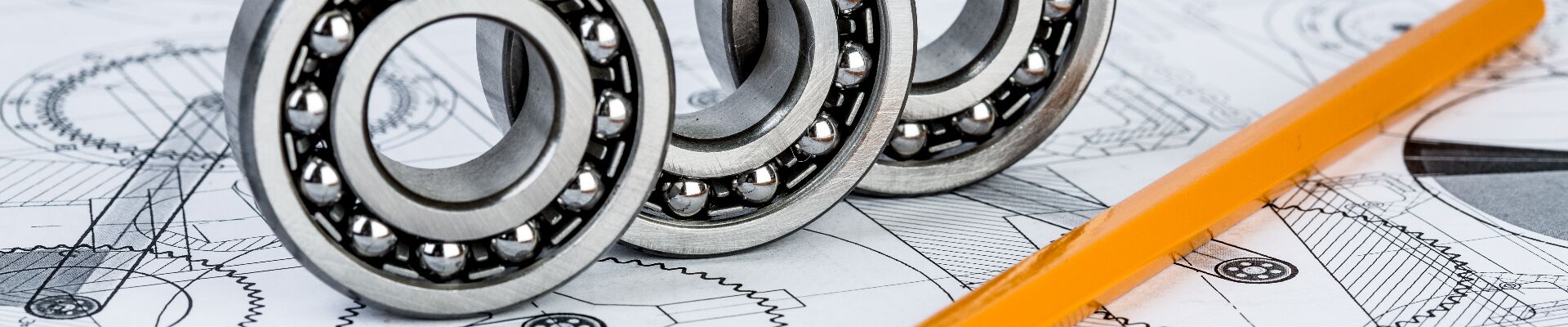
Comparison of Common Bearing Material Performance
As an indispensable key component in mechanical equipment, the performance of bearings directly affects the operating efficiency and lifespan of the equipment. Currently, the most common bearing materials on the market include all-ceramic bearings, hybrid ceramic bearings, stainless steel bearings, and ordinary bearing steel bearings. This article will compare and analyze these four bearing materials from both advantages and disadvantages perspectives.
Advantages:
High and Low Temperature Resistance: All-ceramic bearings can maintain stable performance in extreme high or low temperature environments, making them suitable for aerospace, petrochemical, and other fields.
Strong Corrosion Resistance: Ceramic materials have extremely high corrosion resistance, enabling long-term stable operation in harsh environments such as strong acids and alkalis.
Lightweight: The density of ceramic materials is lower than that of metals, making all-ceramic bearings lighter than metal bearings of the same volume, helping to reduce equipment load and improve energy efficiency.
High Hardness and Good Wear Resistance: The hardness of ceramic materials is much higher than that of metals, giving all-ceramic bearings excellent wear resistance and extending their service life.
Antimagnetic and Electrical Insulation: Ceramic bearings are non-magnetic materials with good electrical insulation properties, making them suitable for applications requiring non-magnetic environments or electrical insulation.
Disadvantages:
High processing difficulty: Ceramic materials have high hardness and brittleness, making machining and grinding processes complex and production costs high.
High cost: Due to the special nature of the material and the difficulty of processing, the market price of all-ceramic bearings is generally high.
Fragility: Ceramic materials are inherently fragile and prone to cracking and breakage, requiring high tolerance to impacts and vibrations during assembly and use.
Advantages:
High performance: Hybrid ceramic bearings combine the advantages of ceramic and metallic materials. For example, the low density and low coefficient of friction of silicon nitride balls improve operating speed and reduce heat generation.
Long lifespan: The fatigue life of hybrid ceramic bearings is typically 3-5 times longer than that of all-steel bearings, effectively reducing downtime for maintenance and production scrap rates.
High design flexibility: Due to the characteristics of silicon nitride, bearing designers can change different parameters without much consideration for the impact.
Wide range of applications: Suitable for working environments requiring high speed, high precision, and long service life.
Disadvantages:
High cost: Although slightly lower than all-ceramic bearings, hybrid ceramic bearings are still more expensive than ordinary steel bearings.
High Assembly Requirements: High precision is required for assembly; impact and vibration must be avoided to prevent damage.
Advantages:
Strong Corrosion Resistance: Stainless steel bearings have excellent corrosion resistance, suitable for use in humid or corrosive environments.
High Temperature Resistance: Can operate in high-temperature environments without losing performance.
Good Hygiene: Easy to clean and disinfect, suitable for food, pharmaceutical, and medical equipment industries.
Low Wear Rate: Stainless steel bearings typically have a low wear rate, extending service life.
Disadvantages:
High Cost: Stainless steel bearings have complex material costs and processing, resulting in a higher price.
Relatively Low Load Capacity: Not suitable for applications with extremely high loads.
Magnetic Properties: Stainless steel bearings often have some magnetic properties, which may not be suitable for applications requiring non-magnetic bearings.
4. Ordinary Bearing Steel Bearings
Advantages:
High Hardness: Bearing steel has high hardness, providing good wear resistance.
Easy to Manufacture: The manufacturing process for bearing steel is relatively mature, resulting in lower production costs.
Wide Applications: Suitable for various conventional operating conditions, it is the most common bearing material on the market.
Disadvantages:
Lubrication issues: Under extreme operating conditions, bearing steel bearings have higher lubrication requirements; insufficient lubrication may lead to performance degradation.
Limited corrosion resistance and high-temperature resistance: Compared to ceramics and stainless steel, bearing steel has poorer corrosion resistance and high-temperature resistance.
Relatively shorter lifespan: Under high load and high-speed operation, the lifespan of bearing steel bearings may be shorter than that of ceramic and stainless steel bearings.
All-ceramic bearings, hybrid ceramic bearings, stainless steel bearings, and ordinary bearing steel bearings each have their unique advantages and disadvantages. When selecting bearing materials, a comprehensive consideration of specific application requirements, cost-effectiveness, and environmental factors is necessary. For example, in extreme high-temperature, low-temperature, or corrosive environments, all-ceramic and stainless steel bearings are more advantageous; while in cost-sensitive applications where performance requirements are not extremely high, ordinary bearing steel bearings are more suitable. Hybrid ceramic bearings, with their high performance and moderate cost, have become the preferred choice in many high-end applications.
Post time: Aug-03-2026


