


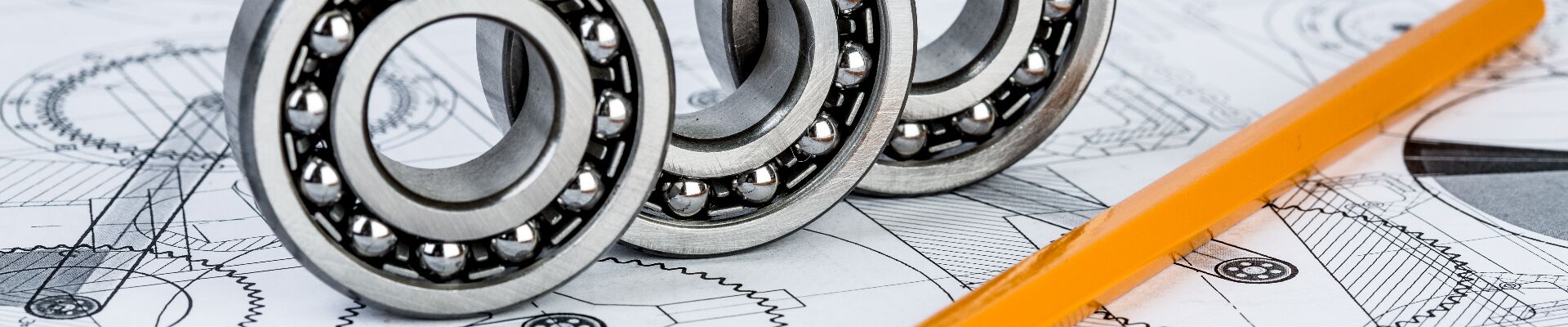
Precisely Match Bearing Models to Operating Conditions
In mechanical design, although bearings are small components, they directly determine the operational stability of the entire machine. Many pieces of equipment operate normally initially, but later develop frequent abnormal noises, overheating, or even premature failure. This is often because the selection of bearings relies solely on experience to "match the model," neglecting the matching degree to actual operating conditions. The core logic of selecting the right bearing lies in comprehensively evaluating key factors such as load, speed, environment, and installation space, and then addressing the specific needs.
1. Determine the Type Based on Load Characteristics
Load is the primary consideration in bearing selection. If the equipment only bears a small radial load and the speed is relatively high (such as motors and fans), deep groove ball bearings are the first choice due to their low friction characteristics provided by point contact. If facing heavy loads or impact loads (such as mining machinery and rolling mills), roller bearings should be selected, as their line contact design provides higher load-bearing capacity and rigidity. When the bearing simultaneously bears a large combined radial and axial load, angular contact ball bearings or tapered roller bearings are more suitable. If there is shaft misalignment or installation error, self-aligning roller bearings can automatically compensate for the deviation, avoiding premature failure caused by edge stress.
2. Adjusting Parameters Based on Rotation Speed and Environmental Conditions
Rotation speed directly affects bearing heat generation and wear. High-speed applications require high-precision, low-friction ball bearings with high-quality lubrication; low-speed, heavy-load applications are better suited for roller bearings. Environmental factors are also crucial: humid or dusty environments necessitate reliable sealing structures (such as 2RS rubber seals); high-temperature or corrosive conditions require high-temperature resistant bearing steel, stainless steel, or even ceramic materials to prevent rust or material degradation.
3. Balancing Installation Space and Precision Requirements
In space-constrained, compact designs (such as robot joints and precision reducers), crossed roller bearings or needle bearings offer high rigidity and precision in a very small size. Furthermore, avoid blindly pursuing ultra-high precision; select an adaptation level (P0 to P5) based on actual positioning requirements to achieve a balance between performance and cost.
Common Operating Conditions and Bearing Selection
High-speed, light-load/pure radial force. Advantages: Low friction, high limiting speed, strong versatility.
Heavy-load/strong impact load. Advantages: High line contact load capacity, impact resistance, good rigidity.
Angular Contact Ball/Tap Roller Bearings:
Radial + axial combined load. Advantages: Can withstand bidirectional combined forces simultaneously.
Self-aligning Roller Bearings:
Shaft deformation/large installation errors. Advantages: Automatic self-aligning to compensate for deviations, long service life.
Extremely space-constrained/high rigidity. Advantages: Compact structure, multi-directional force bearing, high precision.
Stainless Steel/Ceramic Bearings:
Humid/corrosive/high-temperature environments. Advantages: Corrosion resistance, extreme temperature resistance.
Post time: Sep-11-2026


