


What is the difference between insulated bearings and ordinary bearings?
Aside from basic technical characteristics and dimensions, insulated bearings and ordinary bearings differ significantly in both appearance and usage features. Below is an analysis of the differences between insulated bearings and ordinary bearings.
What is an insulated bearing?
An insulated bearing refers to a bearing in which a uniform ceramic (alumina) coating is sprayed on the inner or outer ring of an ordinary bearing using plasma spraying technology, integrating insulation performance into the bearing. Alternatively, bearings whose rolling elements are made of ceramic materials (ceramic balls) also have inherent insulation properties, and both types are considered insulated bearings.
Bearings are important components in modern machinery. Their main function is to support rotating machinery parts, reduce friction during movement, and ensure rotational accuracy.
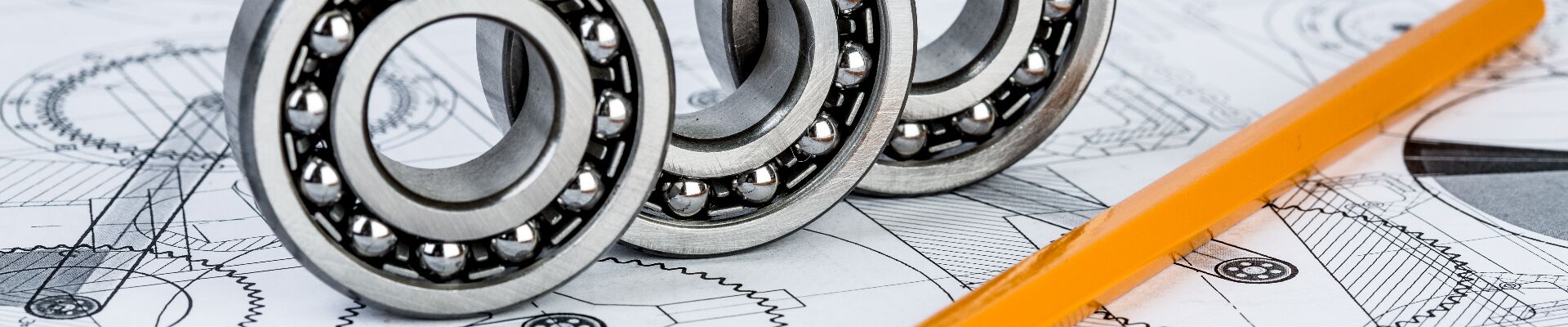
The structure of ordinary bearings typically includes: an outer ring (usually made of bearing steel), an inner ring (usually made of bearing steel), rolling elements (balls or rollers), and a single cage assembly.
According to type, they can be categorized as: deep groove ball bearings, angular contact ball bearings, cylindrical roller bearings, self-aligning roller (or ball) bearings, tapered roller bearings, and others.
Functionally, bearings are intended for support, meaning they bear the shaft, but this is only part of their function. Essentially, bearing support means they can handle radial loads. They can also be understood as devices used to fix shafts, restricting their movement while allowing rotation. The QuckEasy Automation bearing selection has been recorded, meaning bearings fix the shaft so it can only rotate while controlling axial and radial movements.
Insulated bearings are built upon ordinary bearings (with the same inner and outer diameter, load capacity, speed, and weight) but have a layer of insulating material applied to the bearing's inner or outer ring, giving it insulation properties. This can prevent induced current from causing electrical corrosion to the bearing and protect grease, rolling elements, and raceways from damage, thereby extending bearing life.
Besides usage characteristics, the difference between the two can also be distinguished by their appearance.
Ordinary bearings usually have the metallic color of bearing steel, while insulated bearings have their inner or outer rings coated with an insulating layer, resulting in different colors. Typically, the inner or outer ring appears black, white, or gray.
Additionally, differences can be identified from the bearing's model suffix. Insulated bearing models are represented the same way as ordinary bearing models, but include some additional suffixes.
Post time: Apr-13-2026


