


What materials are used to manufacture radial bearings?
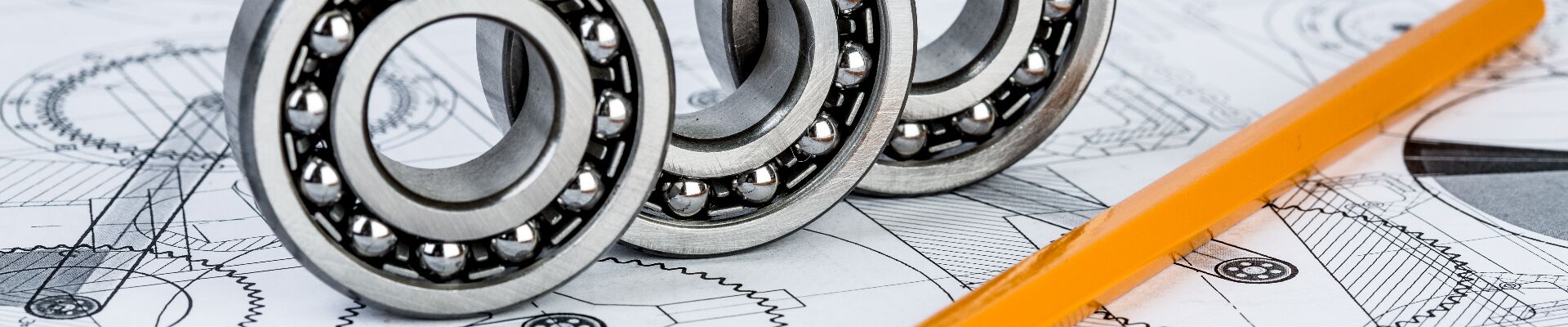
Radial bearings, also known as radial roller bearings, are primarily used to bear radial loads. Their nominal pressure angle is typically between 0 and 45 degrees. Radial ball bearings are frequently used in high-speed applications and consist of precision balls, a cage, inner and outer rings, etc. These bearings are widely used in the machinery industry, automotive industry, cement and mining industry, chemical industry, and electrical appliance industry.
To meet the operational requirements of equipment for radial bearings, the materials used to manufacture them must possess strong load-bearing capacity, embeddability, thermal conductivity, low friction and smooth surface, wear resistance, fatigue resistance, and corrosion resistance. Currently, no material can completely meet all these conditions; therefore, compromise solutions are usually chosen in most designs. Commonly used materials for manufacturing radial bearings include the following:
Bearing alloys: Bearing alloys, also known as Babbitt metals, are the most widely used bearing alloys. They can adapt to small misalignments or defects in the shaft automatically and can absorb impurities in the lubricant, preventing the shaft from being galled.
Bronze: Bronze bearings are suitable for low-speed, heavy-load applications and applications requiring good alignment. Their performance can be achieved by alloying them with various materials to create different compositions.
Leaded Copper: Bearings made of leaded copper have a higher load-bearing capacity than bearing alloys, but their adaptability is relatively lower. They are used in environments requiring high shaft rigidity and good alignment.
Cast Iron: Cast iron bearings are often used in less demanding applications. However, the journal hardness must be higher than that of the bearing bush, and the working surfaces need to be carefully run-in using a mixture of graphite and oil. Good alignment between the journal and the bearing is essential.
Porous Bearings: Porous bearings are manufactured by sintering metal powder and immersing it in oil. They possess self-lubricating properties and are mainly used in applications where reliable lubrication is difficult or impossible.
Carbon and Plastics: Pure carbon bearings are suitable for high-temperature applications or applications where lubrication is difficult. Bearings made of polytetrafluoroethylene (PTFE) have an extremely low coefficient of friction, allowing them to withstand intermittent oscillations and heavy loads at low speeds, even without oil lubrication.
Post time: Aug-24-2026


